

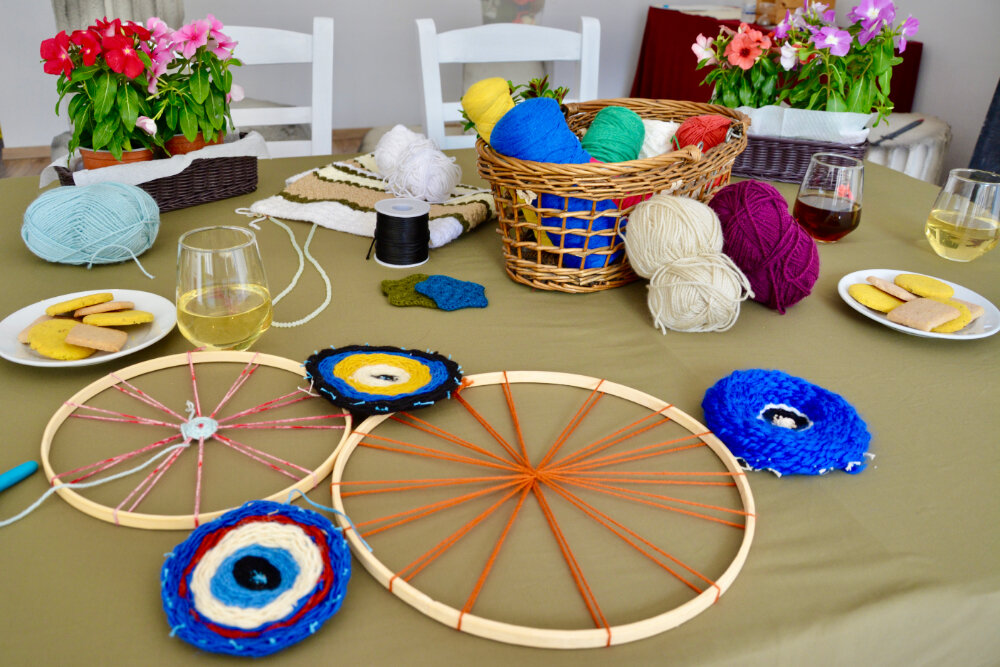
An immersive weaving and charm workshop combines live storytelling with hands-on craft. Guests sit at a real loom, listen to a costumed actor narrate a Greek myth, and weave their own protective charm as the story unfolds. Athens Living Museum runs this format around the myth of Arachne and Athena, pairing loom weaving with the ancient tradition of the evil eye, known locally as the mati.
The session usually lasts about two hours and ends with a handmade keepsake, not a souvenir shop copy. Expect performance, instruction, and a finished piece you actually made yourself.
Most craft workshops hand you a kit and a set of instructions. This one is different. A trained performer stays in character throughout, weaving the myth of Athena and Arachne into every step of the weaving process. The result feels closer to theatre than to a class, even though you leave with a physical object.
What to Expect in an Immersive Weaving and Charm Workshop?
The session opens with a short scene, not a lecture. An actress introduces herself as part of the myth, setting the tone before anyone touches a loom. This framing matters, since it turns a craft lesson into a piece of living history.
Once the story starts, guests receive a personal loom and a set of colored threads. Instruction happens gradually, in step with the narrative, so nobody feels rushed or lost. No prior weaving experience is needed, and that detail keeps the format accessible to almost anyone.
Guests also get a sensory break built into the session. Traditional Greek herbal tea and snacks arrive partway through, giving hands a rest while the story continues. That pause helps keep focus high for the full two hours.
The Story Behind the Evil Eye Weaving Workshop Athens Visitors Love
The evil eye weaving workshop in Athens draws directly from the myth of Arachne, a mortal weaver who claimed she could outweave the goddess Athena. The contest that followed became one of the clearest lessons in Greek mythology about pride and consequence.
That story pairs naturally with the mati, since both concepts touch on skill, judgment, and protection from harm. As guests weave their own eye charm, the actress explains why ancient Greeks believed the mati could deflect envy and misfortune.
This pairing gives the craft real meaning. Guests are not just following steps. They are recreating a belief system that shaped daily life in ancient Greece, one thread at a time.
Why the Format Works Better Than a Standard Craft Class?
A typical souvenir shop charm takes seconds to buy and carries no story. A handwoven mati carries the maker’s effort and the myth behind it. That difference changes how visitors feel about the object once they get home.
Live narration also solves a common problem with self-guided crafts: boredom during the technical parts. Weaving requires repetitive hand motion, which can drag without something else holding attention. A live actor filling that time with myth keeps guests engaged from start to finish.
Athens Living Museum builds its full theatrical weaving workshop around this exact idea, blending performance and craft so neither element feels like filler.
Who Should Book This Workshop?
Solo travelers looking for a calm, focused activity often enjoy this format, since the pace suits individual attention. Couples get a shared creative task with a story attached, which works well as a lower-key alternative to a typical dinner reservation.
Families also do well here. Children respond to the myth-based storytelling, while adults appreciate the craftsmanship and symbolism behind the mati. For a broader look at kid-friendly options in the city, the family activities in Athens guide covers several related formats.
Group bookings work too, particularly for travelers combining this session with other workshops in Athens to do while visiting, since the weaving session pairs naturally with other short cultural activities.
The Meaning Behind a Handmade Mati
A store-bought evil eye bracelet is mass-produced, often overseas, with no connection to the person wearing it. A handwoven mati carries the maker’s own thread choices, pacing, and attention. That personal element gives it weight a shop item cannot match.
Guests interested in the deeper folklore behind the charm can explore the full evil eye symbolism guide, which covers how the belief spread and why the blue and white color pattern became standard across Greece.
For travelers deciding between a quick souvenir purchase and a hands-on session, the case for craftsmanship is strong. The full comparison is laid out in why a handmade evil eye beats a tourist shop bracelet, worth a read before booking either option.
What Makes This Different From Other Athens Workshops
Most craft workshops in Athens focus on one skill- pottery, cooking, or jewelry making- taught in a fairly standard classroom format. The weaving and charm workshop adds a theatrical layer that most craft sessions skip entirely.
This matters for travelers who want cultural depth, not just a souvenir-making session. Learning to weave is useful. Learning why ancient Greeks believed weaving was connected to fate and protection adds context that sticks with visitors long after the trip ends.
Guests who enjoy this narrative-driven format often continue with the related weaving fate theatrical workshop sessions, which expand on similar mythological themes through a different storyline.
The Craft Skills You Actually Learn
Beyond the story, guests pick up real loom weaving basics during the session. Threading, tension control, and simple pattern work all get covered at a beginner pace. These are transferable skills, not just a one-time party trick.
Many guests find the repetitive motion of weaving genuinely calming, almost meditative. Combined with the narrative pacing, the workshop often feels less like a tourist activity and more like a short creative retreat.
The finished mati also teaches color symbolism along the way. Blue and white threads dominate for a reason, tied directly to the protective meaning behind the traditional Greek eye charm. Guests leave understanding not just how to weave, but why the colors matter.
How This Fits Into a Broader Athens Itinerary?
Travelers often pair this workshop with other cultural stops nearby, since the Plaka district sits close to major historical sites. A morning at the Acropolis followed by an afternoon weaving session balances heavy sightseeing with something slower and more personal.
The workshop also works well as a rainy-day backup. Since everything happens indoors, weather has no impact on the experience, which makes it a reliable option when outdoor plans fall through.
Photography opportunities are limited during the performance itself, out of respect for the storytelling, but guests can usually photograph their finished charm and the setting afterward. That balance keeps the group focused on the experience rather than a phone screen.
Practical Details Before You Book
Sessions typically run daily, with a fixed start time and limited group size to keep the theatrical element personal. Pre-booking is strongly recommended, since spots fill quickly during peak travel months.
Comfortable seating and good lighting make the physical weaving part manageable for guests of all ages. Actors typically speak in English throughout, though it is worth confirming language options directly if that matters for your group.
Plan for roughly two hours total, including the story, the weaving instruction, the tea break, and time to finish your charm. Rushing the session removes much of what makes it worthwhile.
A Souvenir With a Story Attached
Most Athens souvenirs get forgotten in a drawer within a year. A handwoven mati tends to last longer in memory, since the making process is tied to a specific afternoon, a specific story, and a specific version of the myth told just for that group.
Guests often report gifting the charm to friends or family, passing along both the object and the story behind it. That kind of word-of-mouth sharing is difficult to generate through a standard gift shop purchase.
Bringing It All Together
An immersive weaving and charm workshop turns a simple craft into a full cultural experience. Guests leave with more than a souvenir. They leave with a handmade mati tied to one of Greek mythology’s most memorable stories.
If you want a hands-on Athens experience that combines performance, craft, and real cultural meaning, book the theatrical weaving workshop at Athens Living Museum. Sit at the loom, meet Arachne’s story firsthand, and take home a charm that actually means something.
Frequently Asked Questions
What is an immersive weaving and charm workshop?
It is a live, theatrical session where guests weave their own protective charm, usually an evil eye, while an actor narrates a related Greek myth throughout the process.
Do I need weaving experience to join?
No prior experience is required. Instruction happens step by step alongside the story, so complete beginners can follow along easily.
How long does the workshop last?
Most sessions run about two hours, including the storytelling, guided weaving, a tea break, and time to finish the charm.
Is this workshop suitable for children?
Yes. The myth-based storytelling appeals to younger guests, while the craft itself is simple enough for most age groups to complete.
What is the significance of the evil eye in Greek culture?
The evil eye, or mati, is a traditional symbol believed to protect against envy and misfortune, rooted in centuries of Greek folklore.
Can I take my finished charm home?
Yes. Guests keep the handwoven mati they create during the session, along with the loom used to make it.
