

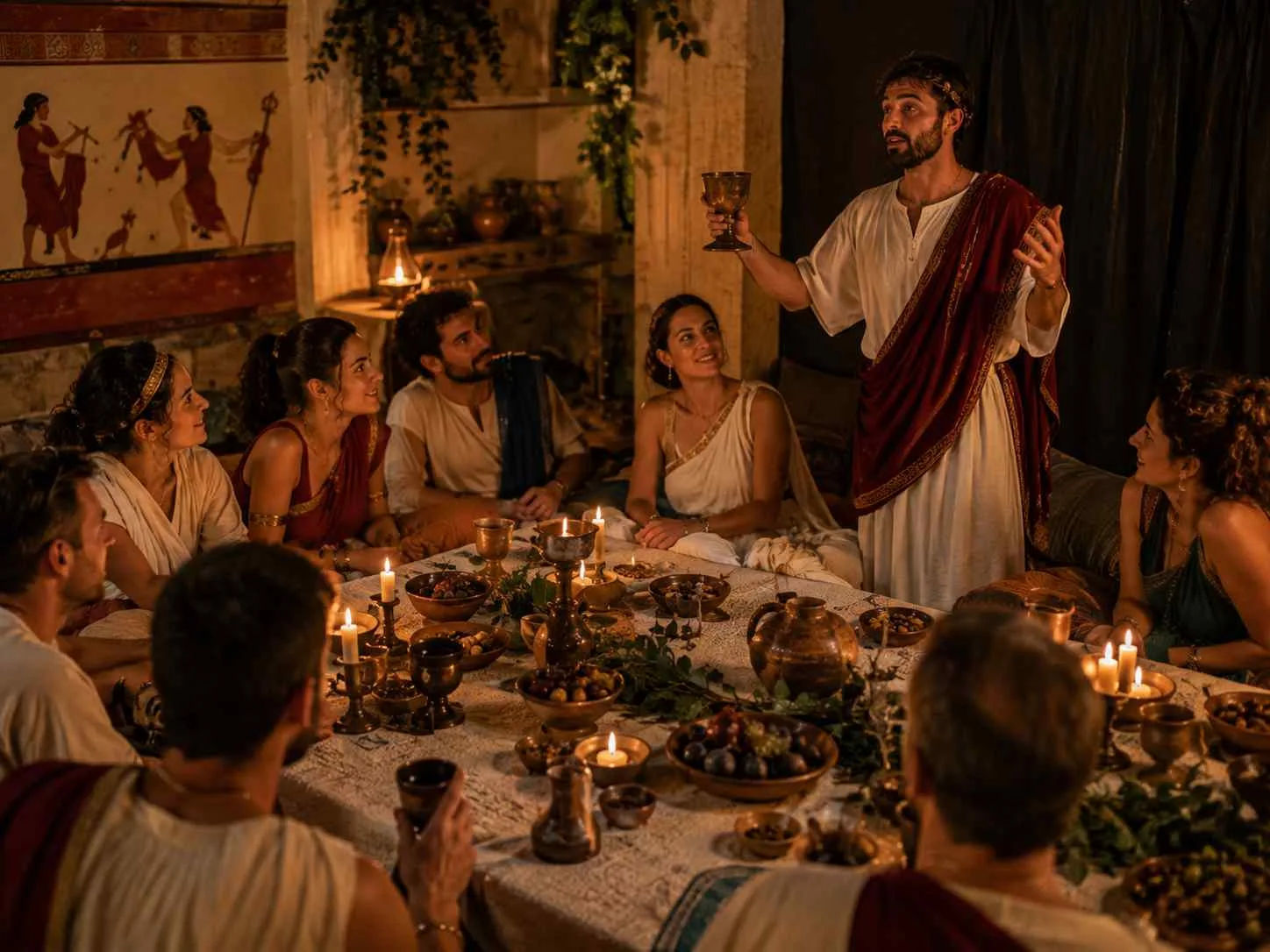
A dinner-theater experience in Athens combines a full meal with a live, in-character performance, recreating the ancient Greek symposium instead of a standard restaurant night out. Athens Living Museum runs this format around a real historical structure, wine, food, philosophy, and drama, staged as it would have unfolded over two thousand years ago.
Guests recline at the table, meet a symposiarch who sets the tone for the evening, and often get pulled into a live mystery unfolding around them. The result is a meal that also functions as theatre, and theatre that also functions as dinner. Neither element gets treated as filler for the other.
Most travelers picture dinner and entertainment as two separate bookings, a restaurant first, a show after. That separation misses what made Greek dining historically interesting in the first place. Ancient symposia combined food, wine, performance, and conversation into one continuous event, and reviving that structure changes how a modern dinner feels.
Combine Gastronomy and Storytelling: How the Format Actually Works
A symposium in ancient Athens followed a clear sequence. Guests ate first, then wine and conversation took over, guided by a symposiarch who decided how strong the wine would be poured that night. Music, riddles, and philosophical debate filled the hours that followed.
Athens Living Museum rebuilds that sequence for modern guests, without turning it into a costume party. Food arrives first, based on dishes with real historical grounding. Performance and mystery unfold afterward, layered into the meal rather than interrupting it.
This structure matters because it keeps pacing natural. Nobody sits through a rushed show before eating cold food, and nobody eats in silence waiting for entertainment to start. The two elements move together, the way they originally did.
Why the Format Beats a Standard Dinner Show?
A typical dinner show separates food and performance into two distinct phases, plate first, spectacle second. Guests usually watch passively, with little to no direct involvement in what happens on stage.
Symposium-style dinner theater removes that separation entirely. Guests become part of the scene, asked questions, handed props, or pulled into a mystery that plays out in real time around the table. That involvement is what makes the format memorable rather than merely entertaining.
Athens Living Museum’s ancient Greek symposium experience uses exactly this approach, blending historical accuracy with genuine audience participation throughout the evening.
The Role of Who Killed Callimachos in the Symposium Experience
Many symposium evenings at Athens Living Museum build toward a central mystery, an in-character murder investigation known as Who Killed Callimachos. Guests question suspects, gather clues, and debate theories, all while the meal continues around them.
This mystery format works because it gives guests a job to do, not just a scene to watch. Conversation at the table naturally turns toward the case, mirroring the way ancient symposia used debate and riddles to keep guests engaged between courses.
Groups that enjoy this format often go on to book the full Who Killed Callimachos murder mystery experience separately, since the mystery itself carries enough depth to stand as its own evening.
What Guests Actually Eat During the Evening?
Food matters just as much as the performance, and Athens Living Museum treats it that way. Dishes draw from documented ancient Greek recipes and ingredients, not generic Mediterranean fare dressed up with a historical label.
Bread, olives, cheese, and wine anchor the meal, echoing what ancient Athenian hosts would have served their own guests. Portions and courses follow a rhythm similar to the original symposium structure: food first, wine and conversation building afterward.
Guests curious about the historical accuracy behind the menu can explore the full breakdown in the Greek gastronomy history guide, which covers how ancient recipes survived and evolved into today’s cuisine.
Wine, Conversation, and the Role of the Symposiarch
Wine at a real symposium was never simply poured and forgotten. A symposiarch controlled how strong each round was mixed, since ancient Greeks diluted wine with water rather than drinking it undiluted. That role shaped the entire tone of the evening.
Modern guests experience a version of this tradition during the performance, with an in-character host explaining the ritual and guiding the pace of the night. It adds structure to what could otherwise feel like an ordinary group dinner.
Conversation also gets built into the evening deliberately. Guests debate philosophy, trade theories about the mystery, and often end up laughing over the kind of dry humor found in the piece on wine and philosophy in ancient Greece, which explores how seriously ancient Greeks actually took their jokes.
Who Should Book a Symposium-Style Dinner?
Couples looking for something more memorable than a standard restaurant reservation find the format especially effective, since shared participation in a mystery creates conversation that lasts well beyond the meal itself.
Groups of friends and small corporate teams also benefit, particularly when everyone gets pulled into solving the mystery together. Shared problem-solving over dinner tends to build stronger connections than a silent meal followed by a passive show.
Curious travelers interested in ancient dining customs beyond the performance itself can read more in the piece on ancient Greek eating customs, which adds useful context before booking.
Where Kottabos Fits Into the Evening?
Ancient symposia were not only about serious philosophy. Games filled the hours between courses, and one of the most popular was kottabos, a wine-flicking contest guests played for fun and small prizes. Modern dinner-theater evenings sometimes revive this playful tradition alongside the mystery.
Including a game like this reminds guests that ancient Greek dining had a lighter side too. Not every symposium turned into a deep philosophical debate. Guests curious about the game itself can read more about kottabos, the ancient Greek drinking game</a>, often described as an early ancestor of modern party games.
How This Differs From a Typical Athens Night Out?
Standard nights out in Athens usually mean picking a restaurant, then separately deciding whether to catch a show or a bar afterward. That approach works, but it requires planning two experiences instead of one cohesive evening.
A symposium-style dinner collapses those decisions into a single booking. Guests do not need to plan transportation between venues or worry about timing a show around a meal. Everything happens in one setting, paced deliberately from start to finish.
This also solves a common complaint about themed dinners elsewhere, where the performance feels disconnected from the food. Because the symposium format is built around a documented historical structure, food and story reinforce each other instead of competing for attention.
What Makes the Storytelling Feel Genuine?
The performers driving the mystery stay fully in character throughout the meal, never breaking to explain jokes or historical details outside the scene. That commitment keeps the evening immersive instead of feeling like a lecture with costumes attached.
Small details reinforce this further, from period-appropriate table settings to the way actors address guests directly by their assumed roles for the night. Guests are not spectators watching history from a distance. They are temporary participants inside it.
Practical Details Worth Knowing Before You Book
Sessions typically run for a few hours, covering the full arc from opening course to the mystery’s resolution. Rushing the evening removes much of what makes the format work, so plan for a relaxed night rather than a quick stop.
Groups usually keep their size manageable, since audience participation depends on guests actually being seen and heard by the performers. Larger crowds dilute that interaction significantly.
The kitchen can typically accommodate dietary preferences with advance notice, since the menu follows a structured but adaptable format rather than a single fixed set of dishes.
Bringing It All Together
Combining gastronomy and storytelling turns a routine dinner into a full evening built around history, food, and genuine participation. The symposium format gives modern travelers a structure ancient Athenians would recognize immediately.
If you want an Athens evening built around more than good food alone, book the symposium dinner-theater experience at Athens Living Museum. Recline at the table, meet the symposiarch, and help solve a mystery that unfolds around you course by course.
Frequently Asked Questions
What is a dinner-theater experience in Athens?
It is a format combining a full meal with live, in-character performance, based on the ancient Greek symposium. Storytelling and dining happen together rather than separately.
What is an ancient Greek symposium?
A symposium was a structured social gathering focused on food, wine, and conversation, typically following dinner and guided by a host known as the symposiarch.
Is the murder mystery included in every symposium dinner?
Many symposium sessions build toward an interactive mystery, such as the Who Killed Callimachos storyline, though guests should confirm details when booking a specific date.
Is this experience suitable for people with dietary restrictions?
With advance notice, the kitchen can accommodate most dietary needs, since the menu structure allows for adjustments while keeping the historical dining format intact.
How long does a symposium-style dinner typically last?
Most sessions run for a few hours, covering the full meal, performance, and mystery resolution at a relaxed, unhurried pace.
Is a symposium dinner better for couples or larger groups?
Both work well. Couples enjoy the shared mystery-solving experience, while small groups benefit from the collaborative, conversation-driven format built into the evening.
