

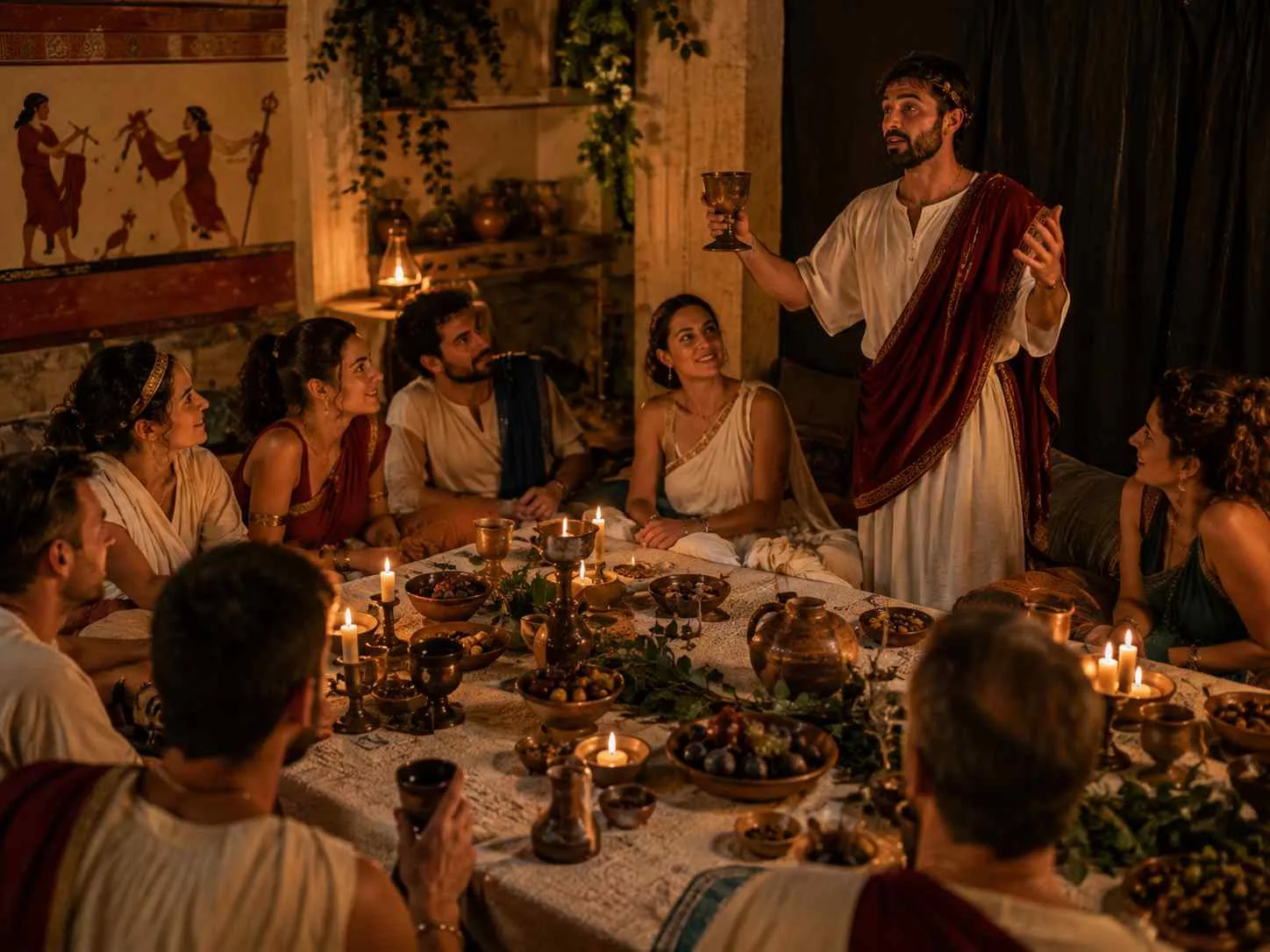
A Greek New Year’s Eve in Athens mixes old customs with a big night out. Slice a vasilopita and hunt for the lucky coin, smash a pomegranate for good fortune, hear carol singers at the door, and build the evening around a live show in ancient Athens, so midnight finds your group already celebrating together in the heart of the city.
How Greeks Actually See the Year In
New Year in Greece belongs to Agios Vasilis, Saint Basil, who brings gifts on New Year’s Eve rather than at Christmas. Families gather at home for a long dinner, cards and games run late, and the night turns on food, luck and good wishes for the year ahead. Athens adds fireworks, full restaurants and streets that stay lively long past midnight.
The charm for a visitor is the blend. This is not a generic party night copied from every capital in Europe. The customs are old, specific and still practised in ordinary homes, and a guest who joins in with them gets a warmer welcome than one who watches from the pavement. Myths and luck have always sat close to daily life here, a thread you can follow in this piece on why Greek mythology is still relevant today. New Year is the night that thread glows brightest.
Plan the night in layers. A show to gather the group early, a long dinner, the customs at midnight, and a slow start on New Year’s Day. That shape suits Athens, suits families, and suits groups who want a celebration with a story rather than a countdown in a crowded square alone.
The Vasilopita, a Cake With a Coin Inside
The star of the night is the vasilopita, a round cake baked for Saint Basil with a single coin, the flouri, hidden inside. At midnight, or at the New Year meal, the head of the household cuts the cake with ceremony. The first slices go to Christ, the house and Saint Basil, then slices are named for each person present, oldest to youngest. Whoever finds the coin in their slice carries the luck for the year.
Homes, offices, clubs and schools across Greece cut a vasilopita through January, so visitors staying into the new year will see the ritual more than once. If your group rents an apartment in Athens, buy a vasilopita from a bakery, write the year on top in almonds or icing as the bakeries do, and cut it at midnight with your own list of names. Keep the coin hunt friendly and watch the children. They take the luck very seriously.
Restaurants and hotels often hold their own cutting for guests. Ask when you book your New Year’s Eve dinner and you may find the ceremony built into the night, which saves you organising a cake in a strange kitchen.
Luck at the Door, Pomegranates and First Footing
Greeks stack the odds for the new year with small rituals at the threshold. A pomegranate, a symbol of abundance and fertility since ancient times, is smashed at the front door at midnight or on New Year’s morning. The more seeds that scatter, the more luck and prosperity the house can expect. Many families keep a pomegranate hanging by the door from Christmas for this moment.
The first person to enter the home after midnight also matters. This custom, called podariko or first footing, asks for a lucky guest, often a child, to step in with the right foot first and bring good fortune across the threshold. Hosts choose their first footer with care and greet them like royalty.
You may also see a wild onion, the kremmyda, hung on a door. Greeks treat this hardy plant as a sign of rebirth and health, since it grows new shoots long after it is pulled from the ground. Carol singers add the soundtrack. Children go door to door through the holidays singing kalanta with a small triangle, collecting coins and sweets, and New Year’s Eve has its own songs for Agios Vasilis.
Visitors can join the spirit of all this with one simple habit. Wish everyone you meet Kali Chronia, Happy New Year, and mean it. Athens returns the wish with interest.
Build the Night Around a Show in Ancient Athens
A fixed evening plan saves New Year’s Eve. Restaurants run set seatings, taxis vanish near midnight, and a group without an anchor drifts. A live show early in the evening gathers everyone in one warm room, gives the night its story, and still leaves the countdown free.
Who Killed Callimachos? runs daily at 6 PM in an indoor, air conditioned venue in central Athens. Your group plays detective in the 5th century BC, working with the fictional officer Nikarchos to question suspects and crack the case. It is funny, social and kind to mixed groups, since grandparents and teenagers end up on the same team arguing about the same clue. Starting the biggest night of the year with shared laughter is a strong move.
The Odyssey Live offers the grander curtain raiser. The full epic plays out in 75 minutes of English language theatre, with gods and monsters live on stage and a chilled mini bottle of Greek wine for adults, juice for children. A voyage home against the odds is a fitting story for the last night of a year, and the toast built into the ticket suits the date.
Holiday dates fill fast across Athens, and the Christmas season brings its own programme of events to the city, as this guide to Christmas events in Athens shows. Treat New Year’s Eve shows the same way. Book early, confirm your numbers, and take the venue details from your booking confirmation on the night.
Dinner, Midnight and the Small Hours
After the show, dinner carries the group to midnight. Book a table for a late seating and order for sharing. Greek New Year tables lean rich after the Christmas fast for many families, with good meat, salads, cheese and plenty of bread, and nobody counts courses on this night.
Time the vasilopita for midnight if your restaurant holds a cutting, or save your own cake for the apartment afterwards. Step outside for the fireworks and the noise of the city greeting the year, then decide your pace. Bars in the centre run late, bakeries open early, and the first morning of the year in Athens has a soft, slow feel that rewards a walk before the crowds wake.
Groups that want dinner and theatre in one booking can look at Around Greece in Five Dishes, the five-course dinner with live music and storytelling through five regions of Greece. On the busiest nights of the year, a single booking that feeds and entertains the whole group removes a layer of planning. Check availability for your date early, flag dietary needs when you book, and note that vegetarian menus are available on request.
A Typical Greek-Style New Year’s Eve for Visitors
Here is a workable shape for a group spending the night in Athens.
Spend the afternoon slowly. Walk the centre, buy a vasilopita and a pomegranate, and rest before the long night. Gather the group for the 6 PM murder mystery and let the case break the ice between friends, partners and family who may only meet once a year.
Move to your booked dinner with time in hand. Eat long, play a hand of cards if your table allows it, and raise the last glass of the old year to the people who made it. At midnight, join the countdown, cut the cake, name the slices with care, and crown your coin finder as the luckiest guest of the coming year.
On New Year’s morning, sleep in, then take the pomegranate to the door of your apartment or hotel balcony and give the year a proper start. A slow coffee, a walk through quiet streets, and a plan for one more evening experience in the days that follow will carry the holiday mood home with you.
Tips for Booking the Busiest Night of the Year
Start early. Flights, rooms, dinners and shows in Athens all tighten for the holiday week, and groups of 10 or more who want private bookings or discounts should contact venues well ahead through the full list of experiences. Give a realistic group size, confirm the terms in writing, and settle final numbers by the deadline you are given.
Keep the group close to the centre. A central base means short walks between the show, dinner and your beds, which matters at 1 AM when taxis are scarce. Dress for a cold night by Athens standards. The city stays mild compared with northern Europe, but midnight outdoors still calls for a proper coat.
Last, leave New Year’s Day unplanned. Shops largely rest, families visit, and Athens breathes out. A gentle day sets up the rest of a January trip far better than a packed itinerary written in December optimism.
Frequently Asked Questions
What is a vasilopita and when is it cut?
A vasilopita is a round New Year cake with a lucky coin baked inside, cut at midnight or at the New Year meal. Slices are named for the house and for each guest, and the person who finds the coin is said to have luck all year.
What Greek customs can visitors join on New Year’s Eve?
Visitors can wish Kali Chronia, share a vasilopita cutting, smash a pomegranate at the door for luck and enjoy the fireworks and late dinners of the city centre. Join family customs only when invited, and follow your hosts with good humour.
Are the museum shows running around New Year?
The anchor shows run on daily schedules through the holiday season, and dates near New Year’s Eve are popular. Book the evening you want as early as you can and confirm the details on your booking confirmation.
What should a group book first for New Year’s Eve in Athens?
Book the anchor of the night first, your show or your dinner seating, then fit the other around it. Groups of 10 or more can ask about private bookings and discounts by contacting the team through the experiences page.
