

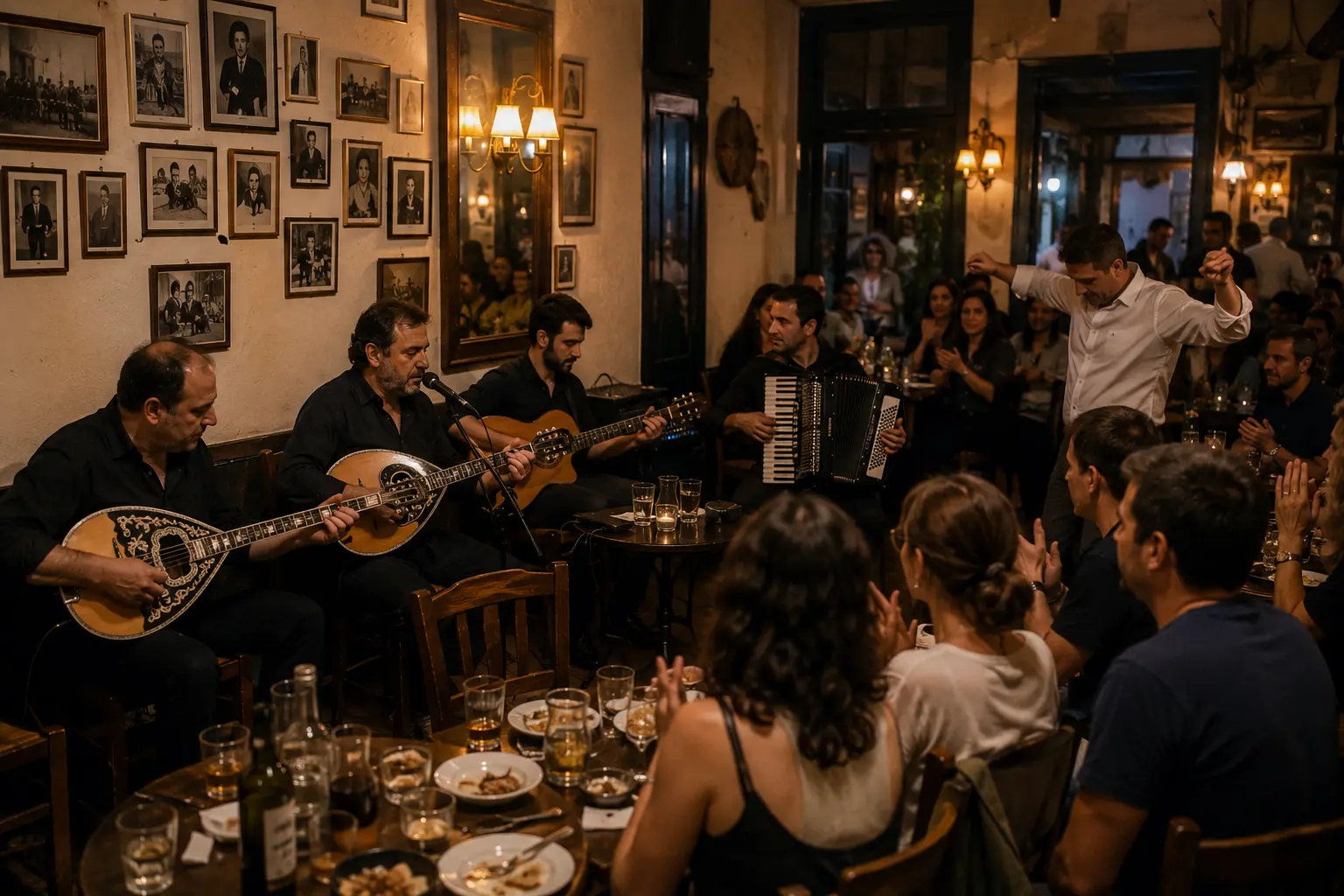
Live rebetiko and traditional Greek music in Athens usually means a small, smoky taverna, a few musicians playing bouzouki and baglama by hand, and a room full of people singing along to songs that are over a century old. Rebetiko began as the music of port cities and refugee neighborhoods in the early 1900s, and it still carries that raw, melancholic edge today.
Visitors should expect an intimate setting rather than a polished concert hall, with musicians often seated at floor level just a few feet from the tables. Athens Living Museum works with this same spirit of authenticity across its cultural experiences, which makes it a useful reference point for travelers trying to understand what a real rebetiko night actually feels like.
For anyone planning a night out built around Greek music, the good news is that Athens still has a strong live scene. It is concentrated in a handful of neighborhoods, runs on a schedule that differs from what most visitors expect, and rewards a bit of preparation before walking in the door.
What to Expect From Live Rebetiko and Traditional Greek Music in Athens?
Live rebetiko and traditional Greek music in Athens rarely starts early. Most venues do not get going until 10 or 11 in the evening, and the music can continue well past midnight. This is not a dinner show scheduled around tourist hours. It is closer to a local ritual, and arriving too early often means sitting through an empty room before the musicians even set up.
The instruments themselves tell you a lot about what to expect. A typical rebetiko group centers on the bouzouki, a long-necked stringed instrument with a sharp, metallic tone, backed by the smaller baglama, guitar, and sometimes an accordion or violin depending on the style. Singers trade verses about heartbreak, exile, hashish dens, and prison, themes that trace back to the genre’s roots among Greek refugees from Asia Minor in the 1920s.
Audience behavior is part of the experience too. Regulars often stand up mid-song to dance a slow, personal zeibekiko in the open space near the musicians, and it is common for someone to smash a plate or two as a gesture of appreciation, though many venues have switched to flowers or paper confetti to keep costs down. Nobody expects a tourist to join in, but watching this unfold up close is often more memorable than any staged folklore show.
Rebetiko Bars in Athens Worth Knowing About
Rebetiko bars in Athens tend to cluster in a few specific pockets of the city rather than being spread evenly across every neighborhood. Psiri and parts of Gazi host some of the more traditional rebetadika, the small clubs built specifically around this style of music, often with a fixed cover charge that includes a set number of drinks or a shared plate of mezes.
Plaka has a different flavor, leaning slightly more polished and tourist-friendly, but still hosting genuine live sets in tavernas tucked into its narrow streets. Anyone spending an evening exploring that neighborhood might also enjoy pairing a music night with the kind of immersive storytelling found in a live mystery experience in Plaka, since both activities lean on the same atmospheric backdrop of Athens’ oldest district.
Exarcheia, known for its bohemian and countercultural history, is where rebetiko’s rougher, more political edge tends to survive best. Venues here skew local, the crowd is younger, and the music often stays closer to its underground roots than the versions performed for larger, mixed audiences elsewhere in the city.
The History Behind the Sound
Understanding a little history changes how the music lands. Rebetiko took shape in the port neighborhoods of Piraeus and Thessaloniki, shaped heavily by the wave of refugees who arrived from Smyrna and other parts of Asia Minor after 1922. Their songs blended Anatolian modes with local Greek melodies, creating something that sounded foreign to mainstream Greek audiences at the time.
For decades, rebetiko was associated with the margins of society, played in hash dens and working-class bars, and it was even censored under stricter governments for its references to drugs and prison life. That underground reputation is part of why the genre still feels a little rebellious compared to more polished forms of Greek folk music performed for wider audiences.
By the 1960s and 1970s, composers and performers brought rebetiko back into the mainstream, and it is now recognized as a foundational part of modern Greek musical identity, alongside genres like laiko and dimotika. Understanding this history is part of what Athens Living Museum tries to communicate through its own theatrical work, which often draws on similar threads of everyday Athenian life across different periods.
Building a Full Evening Around Greek Music
A rebetiko night pairs naturally with other cultural experiences, especially for visitors who only have a few days in Athens and want to make the most of an evening. Many travelers start with dinner built around regional dishes, and a guided tasting through Greek cuisine covering different parts of the country is a strong way to prime the evening before heading into a live music venue.
Groups traveling together, including companies running an offsite or incentive trip, sometimes structure an entire night around Greek culture rather than treating the music as a standalone stop, often starting the day with a walking theatrical performance before dinner and live music in the evening. Pairing a themed evening performance with a later rebetiko set gives visitors both the mythological and the modern sides of Greek storytelling in a single trip.
For those who prefer something more hands-on before the music starts, a session like the theatrical weaving workshop offers a slower, tactile activity earlier in the day, leaving the evening free for dinner and live music without feeling rushed. Corporate groups in particular tend to like this kind of structured full-day itinerary, since it avoids downtime between planned activities.
Bouzouki, Baglama, and Other Entities Worth Recognizing
Most people associate the bouzouki with Greek music, but it helps to understand the difference between a traditional rebetiko venue and a large touristic bouzoukia nightclub. Today, people use the term bouzoukia to describe large, glamorous nightclubs that feature popular laiko singers, creating a very different atmosphere from the small rebetadika where musicians perform rebetiko in its more traditional style.
Musicians often use the baglama, the smaller relative of the bouzouki, to give rebetiko its distinctive high, thin tone. During periods when authorities viewed the music with suspicion, many musicians chose the baglama because they could easily hide its small size, a historical detail that adds even more meaning when you hear it played live.
Recognizing these instruments and terms before a night out makes the experience easier to follow, especially for visitors relying on a menu or a poster outside a venue to figure out what kind of show they are walking into. A rebetadiko advertising “live rebetiko” is signaling something quite different from a club advertising “live bouzoukia,” even though both fall under the broad umbrella of Greek music.
Practical Tips for a First Rebetiko Night
Reservations matter more than most visitors expect, especially at smaller rebetadika with limited seating close to the musicians. If you arrive without a booking on a weekend, you may have to stand near the bar or leave once the venue fills up after 11 pm.
Cover charges and minimum spends vary widely, so ask about pricing before you sit down to avoid surprises when the bill arrives. Many venues expect guests to order food or a bottle rather than just a single drink, treating the night as a full evening out rather than a quick stop.
Dress codes are generally relaxed, and locals tend to show up in whatever they wore during the day. The real etiquette that matters is patience: rebetiko nights build slowly, and the best moments usually happen well after midnight once the room has warmed up and regulars start requesting their favorite songs from the musicians.
Bringing It All Together
Live rebetiko and traditional Greek music in Athens rewards visitors who understand what they are walking into, from the late start times to the instruments and history behind the sound. Pairing a rebetiko night with a food experience, a themed performance, or a daytime workshop turns a single evening into a fuller picture of Athenian culture. If you are planning a trip or a group event around authentic Greek experiences, get in touch with Athens Living Museum to build an itinerary that fits your dates and group size.
Frequently Asked Questions
What is rebetiko music and where did it come from? Rebetiko is a genre of Greek music that developed in port cities like Piraeus, shaped strongly by refugees from Asia Minor after 1922. It blends Anatolian musical influences with Greek melodies and often covers themes like heartbreak, exile, and hardship.
What time do live rebetiko shows usually start in Athens? Most rebetiko venues do not begin performing until 10 or 11 in the evening, with the music continuing well past midnight. Arriving earlier often means waiting through an empty room before musicians set up.
Where in Athens can I hear authentic live rebetiko? Psiri, Gazi, and Exarcheia host some of the most traditional rebetadika, while Plaka offers a slightly more polished but still genuine live music scene in its tavernas.
What is the difference between rebetiko and bouzoukia? Rebetiko refers to the traditional genre played in small, intimate clubs, while bouzoukia usually describes large nightclub venues featuring popular laiko singers. Both use similar instruments but offer very different atmospheres.
Do I need to book ahead for a rebetiko night in Athens? Yes, especially at smaller venues on weekends. Popular rebetadika fill up quickly after 11 pm, and walking in without a reservation can mean limited or no seating.
Is rebetiko music suitable for visitors who don’t speak Greek? Yes. Although musicians perform the lyrics in Greek, the atmosphere, instruments, and live performance create an engaging experience on their own, and many venues regularly welcome international visitors.
