

Is the Athens Living Museum Family-Friendly? (Age Guide & Tips)
Traveling to Greece with children often feels like a balancing act between historical importance and pure entertainment. You want your kids to appreciate the cradle of Western civilization, but you also want to avoid the “eyes glazed over” look that comes from staring at broken marble for four hours. The Athens Living Museum claims to solve this by turning history into a living, breathing experience. But does it actually deliver for families?
The short answer is yes, but the way your family interacts with the museum depends heavily on the ages of your children. This guide breaks down exactly what to expect, from toddler-friendly tactile moments to the deep intellectual engagement required for teenagers.
The Semantic Core: Why “Living” History Matters for Kids
Standard museums rely on reading plaques. Living museums rely on people and participation. For a child, the difference between seeing a loom behind glass and hearing the rhythm of theatrical weaving is massive. It moves the subject matter from an abstract concept to a physical reality.
Age-by-Age Breakdown
Every child develops at a different pace, but these general guidelines help you manage expectations and choose the right experiences for your group.
| Age Group | Engagement Level | Best Feature | Parental Tip |
| Toddlers (1-4) | High (Sensory) | Tactile objects and movement | Keep visits short; focus on the visual and auditory. |
| Young Kids (5-9) | Very High | Mythology storytelling and costumes | Ask about the “Who Killed Callimachos” mystery for a fun hook. |
| Pre-Teens (10-12) | High (Social) | Hands-on workshops and theater | Great for social media photos and role-playing. |
| Teenagers (13+) | Moderate to High | Historical context and technical skill | Focus on the “Theatre on the Move” for an edgy, mobile experience. |
Experiential Deep Dive: Workshops and Performance
The core of the family appeal lies in the active participation. Children often feel like passive observers in Athens. Here, they become part of the narrative.
Hands-On Workshops
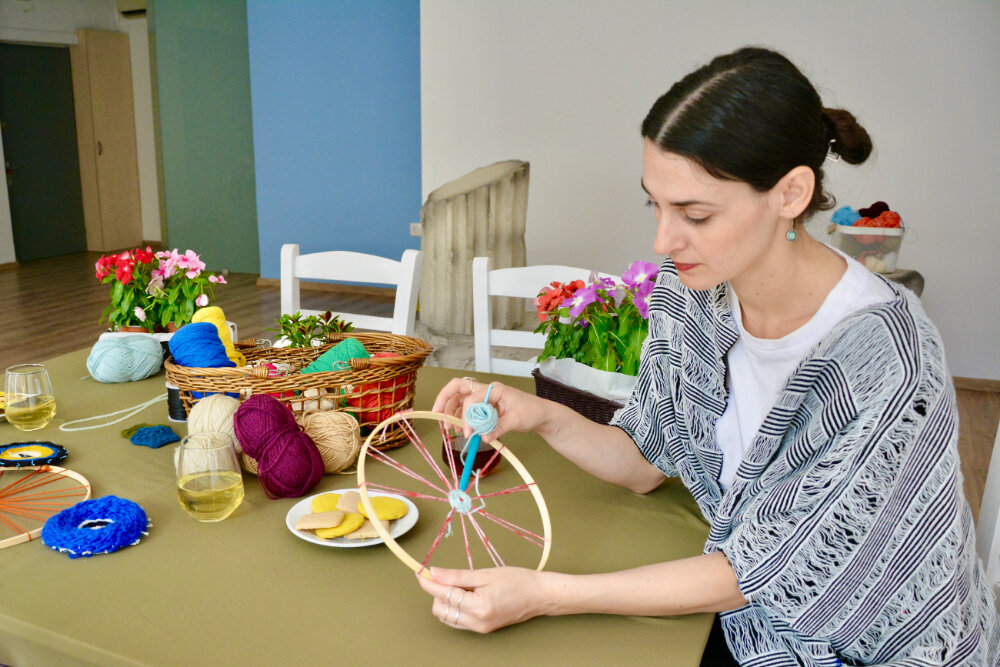
Younger children benefit immensely from tactile learning. In our Theatrical Weaving Workshop, kids don’t just watch. They touch the fibers and understand the mechanics of ancient life. This kind of “kinesthetic” learning is proven to improve information retention in children by up to 60% compared to auditory learning alone.
Theatrical Storytelling
Instead of a guide reciting dates, actors bring historical figures to life. For a ten-year-old, meeting a citizen of ancient Athens is far more memorable than reading about one. If your family enjoys a bit of drama and mystery, the Who Killed Callimachos? production offers an interactive whodunit that keeps kids guessing while they learn about ancient legal and social structures.
Logistical Reality: The Parent’s Cheat Sheet
A family-friendly museum must be more than just “interesting.” It must be accessible.
-
Pacing: The museum allows for a more relaxed pace than the crowded slopes of the Acropolis. You can breathe, move, and let kids be kids without the constant “don’t touch” warnings of traditional galleries.
-
Location: Situated within reach of major transit and other family sites, it serves as a perfect afternoon break from the sun.
-
Staff Interaction: The team is trained to engage with younger audiences. They don’t just talk at children; they involve them in the conversation.
Expertise from the Ground
Having hosted thousands of families over the years, we notice one consistent trend. The families who have the most success are those who lean into the “theatre” aspect. Don’t be afraid to let your kids ask the actors “silly” questions. “What did you eat for breakfast in 400 BC?” is often a better entry point into history than “When was the Parthenon built?” Our performers love these interactions because they create a unique, unscripted memory for the child.
FAQ: Quick Answers for Busy Parents
Is the museum stroller accessible?
The museum makes every effort to accommodate strollers, but like much of central Athens, some areas may have uneven surfaces. We recommend a lightweight travel stroller or a carrier for the most seamless experience.
How long does a typical visit take for a family?
Most families spend between 90 minutes and 2 hours. This is the “sweet spot” for children before hunger or fatigue sets in. If you are participating in a specific workshop, allow for extra time.
Are the theatrical performances too scary for young children?
The performances are designed for a general audience. While some stories involve drama or mystery, like Theatre on the Move, they focus on engagement rather than shocks. You can always check with staff if your child is particularly sensitive.
Do we need to book in advance?
For families, we highly recommend booking ahead. This ensures your spot in specific workshops and helps us prepare for your group size, making the entry process much faster for impatient little travelers.
Conclusion
The Athens Living Museum successfully bridges the gap between educational rigor and family fun. It prioritizes “doing” over “looking,” which is the secret to keeping children engaged in a historical setting. Whether you are solving an ancient mystery or learning a 2,500-year-old craft, the museum provides a context for history that sticks.
As we move toward 2027, the museum continues to expand its digital and interactive offerings, ensuring that even the most tech-savvy “Gen Alpha” kids find something to love.
Ready to book your family adventure? Explore our full range of Experiences or check our About Us page to learn more about our philosophy of living history. We look forward to seeing your family in the heart of Athens!
